Marion learns Tom plans to go to Venice with Patrick
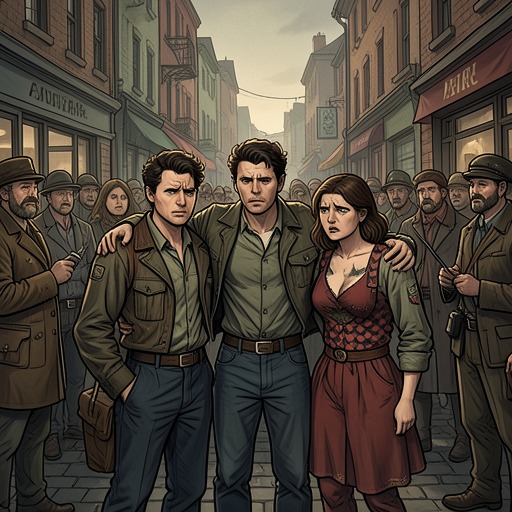
My PolicemanMarion learns that Tom plans to go to Venice with Patrick when Patrick mentions the trip during a children’s visit to Brighton Museum and Art Gallery. The disclosure turns an apparently pleasant afternoon into a marital confrontation: Marion had not heard the plan from Tom, and his later defence of their freedom to see other people does not resolve the hurt caused by his silence. Her response, from throwing wedding china to searching his belongings, shows how the news converts suspicion into a demand for candour.
The museum visit and its purpose
In the weeks before the disclosure, Tom arranged to spend every other Saturday afternoon as well as each Tuesday evening with Patrick, who was still completing Tom’s portrait. Marion did not object. Patrick also came to their home on some Thursdays, bringing wine and chatting about recent plays and films. These visits made the arrangement part of the couple’s routine, even as Marion’s understanding of it remained unsettled.
Over dinner one Thursday, Patrick told Marion that he had persuaded his employer to support a series of art-appreciation afternoons for children at the museum and asked whether her class could be the first to attend. Marion agreed for mixed reasons. She wanted to please Tom and show that she had put aside Julia’s remark; she also wanted to meet Patrick without Tom present and form her own impression of him. She thought she could not openly discuss the matter with Patrick, but hoped that seeing him alone might help her weigh him up.
The visit took place in sunny weather near the end of term. On the bus into town, Marion regretted agreeing: the children were tired and fractious in the heat, and she worried that their behaviour would undermine her authority in front of Patrick. Once inside, however, the museum’s dim, cool interior quieted the group. The mosaic floor and the carved wooden details around the windows and doors made the building newly vivid to her. Unlike on an earlier visit, it seemed neither forbidding nor hidden; Marion felt determined to claim her right to be there. The afternoon went well enough that, while the children waited in the shady hallway clutching their masks, she forgot to check the time.
The disclosure
As the group prepared to leave, Patrick thanked Marion for letting Tom go to Venice and said that he knew Tom appreciated it. Patrick looked directly at her, without shame or malice, and asked whether Tom had mentioned it. His calm manner made the statement sound like a simple fact, but its implication stopped Marion short. She was still trying to understand that Tom and Venice belonged together when a child interrupted to report that Milly was crying.
Marion did not turn back to Patrick. She led the children through the doors, conscious that he remained behind with one hand extended, ready to meet hers, beside the patch of urine left by Milly. The contrast between the orderly school visit and the intimate news she had just received sharpened the moment: Patrick had told her plainly, but Tom had not. Marion left without taking his offered hand, carrying the unanswered question home with her.
Anger at home
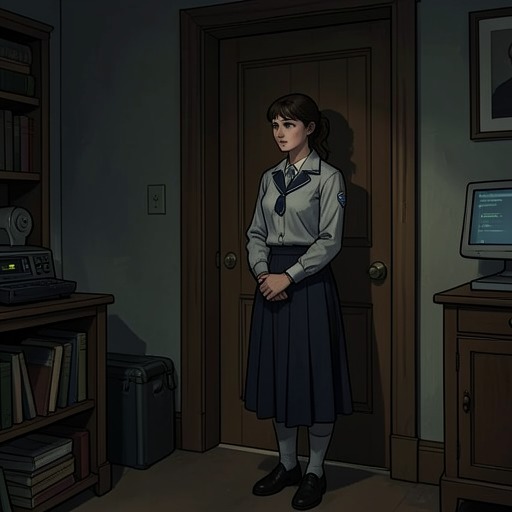
Tom was not home when Marion arrived. She began throwing tea plates across the kitchen, choosing first a thin china plate decorated with blood-red dots that Tom’s mother had given them on their wedding day. The pleasure she took in the sound of the plates breaking surprised her; she threw more, and was disappointed when the last missed the window and produced only one crash rather than two. The failed throw briefly steadied her. Sweating, she took off her shoes, unbuttoned her blouse, opened the windows, and walked through the house as if the evening breeze might let out some of her anger.
In Tom’s half of the wardrobe she pulled down his shirts, trousers, and jackets, then shook out his shoes and socks. She found little to interpret: some receipts, cinema tickets, a half-read John Galsworthy novel, an old watch strap, sunglasses, a newspaper clipping about the sea-swimming club, and a photograph of Tom outside the Town Hall after he had joined the force, with his parents beside him. One cinema ticket was for a film Marion and Tom had not seen together; she pocketed it in case she later needed evidence. She had imagined finding a love letter or a copy of Physique Pictorial, but knew Tom would not have taken such risks. The objects scattered around her did not amount to much, and her search beneath the bed produced nothing that could justify or intensify her rage.
Tom’s defence and the unresolved conflict
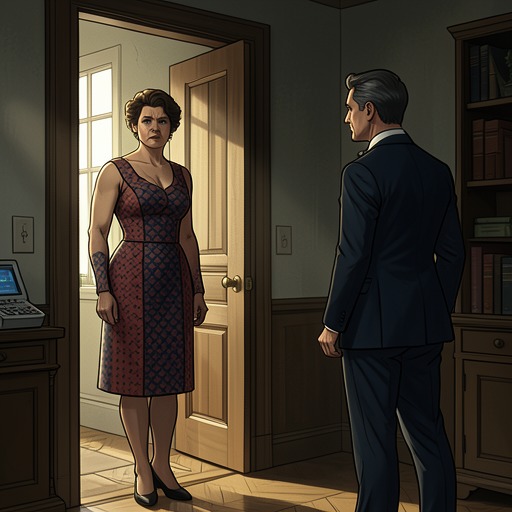
When Tom found her, Marion could not immediately speak. She cried against his chest while he helped her onto the bed, put an arm around her, and rubbed her shoulder without saying anything. Once she had calmed, he asked what was wrong. Marion told him that he was going to Venice with Patrick and asked why he had not told her. The revelation therefore became an argument not only about the journey, but about the meaning of what they had agreed to share as a married couple.
Tom first answered in the detached, controlled manner Marion associated with his police work. She understood this as a capacity to be physically present while emotionally absent, and wondered whether it was more than a professional habit. When she asked again why he had not told her, he said she had to stop and called her behaviour destructive. Marion replied that they were married. Tom countered that he had thought theirs was a modern marriage: Marion had the freedom to work, he argued, so he should have the freedom to see whomever he liked, and he had believed they were different from their parents.
Tom explained that Patrick had asked him only the previous day to accompany him to Venice for a few days. Patrick needed to attend a work conference and wanted company; Tom said he had intended to tell Marion that evening. While making this case, Tom picked clothes up from the floor, folded them, and restored the contents of his bedside drawer, avoiding her gaze. His practical tidying sits against Marion’s earlier, destructive search: both move through the same domestic space, but neither action answers the other’s central concern. The scene ends with Tom questioning whether she would call her response jealousy, while he continues to put the room back in order. The trip’s outcome is not established here; what the episode makes clear is that their ideas of freedom have collided with Marion’s expectation of direct communication.